×
Dans

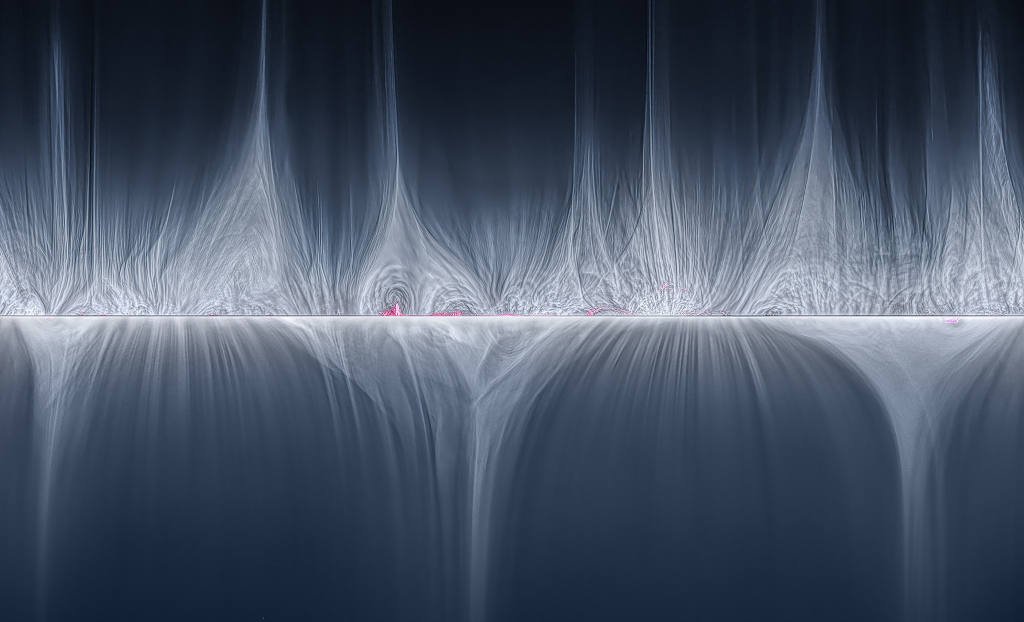
Changes in the alluring solar corona are detailed in this creative composite image mapping the dynamic outer atmosphere of the Sun during two separate total solar eclipses. Unwrapped from the complete circle of the eclipsed Sun’s edge to a rectangle and mirrored, the entire solar corona is shown during the 2017 eclipse (bottom) seen from Jackson Hole, Wyoming, and the 2023 eclipse from Exmouth, Western Australia. While the 2017 eclipse was near a minimum in the Sun’s 11 year activity cycle, the 2023 eclipse was closer to solar maximum. The 2023 solar corona hints at the dramatically different character of the active Sun, with many streamers and pinkish prominences arising along the solar limb. Of course, the solar corona is only easily visible to the eye while standing in the shadow of the Moon. NASA Coverage: Total Solar Eclipse of 2024 April 8

2024-04-05

Auteur/autrice

pelerinmarc@gmail.com

Publications similaires

Dans

NGC 188: Old Cluster in the New General Catalogue

Le New General Catalogue of star clusters and nebulae n’est en réalité pas si nouveau. Il a été publié en 1888, fruit...

Lire la suite
Dans

NGC 188: Old Cluster in the New General Catalogue

Le « New General Catalog of Star Clusters and Nebulae » n’est en réalité pas si nouveau. Il a été publié en 1888, un...

Lire la suite
Dans

The Conjunction of Comet R3 PanSTARRS and the Orion Nebula

L’image composite d’aujourd’hui présente quelque chose de vieux, quelque chose de neuf, quelque chose d’emprunté et quelque chose de bleu ! La...

Lire la suite
Dans

Moon Setting Behind Teide Volcano

Ces personnes ne sont pas en danger. Ce qui descend de la gauche n’est que la Lune, très loin à l’horizon. La...

Lire la suite
Dans

Comet R3 PanSTARRS and Orion

Orion n’avait jamais eu une épée pareille. Alors que la comète C/2025 R3 (PanSTARRS) quitte le système solaire interne, elle offre un...

Lire la suite
Dans

Messier Craters in Stereo

De nombreuses nébuleuses brillantes et amas d’étoiles dans le ciel de la Terre sont associés au nom de l’astronome Charles Messier, d’après...

Lire la suite