×
Dans

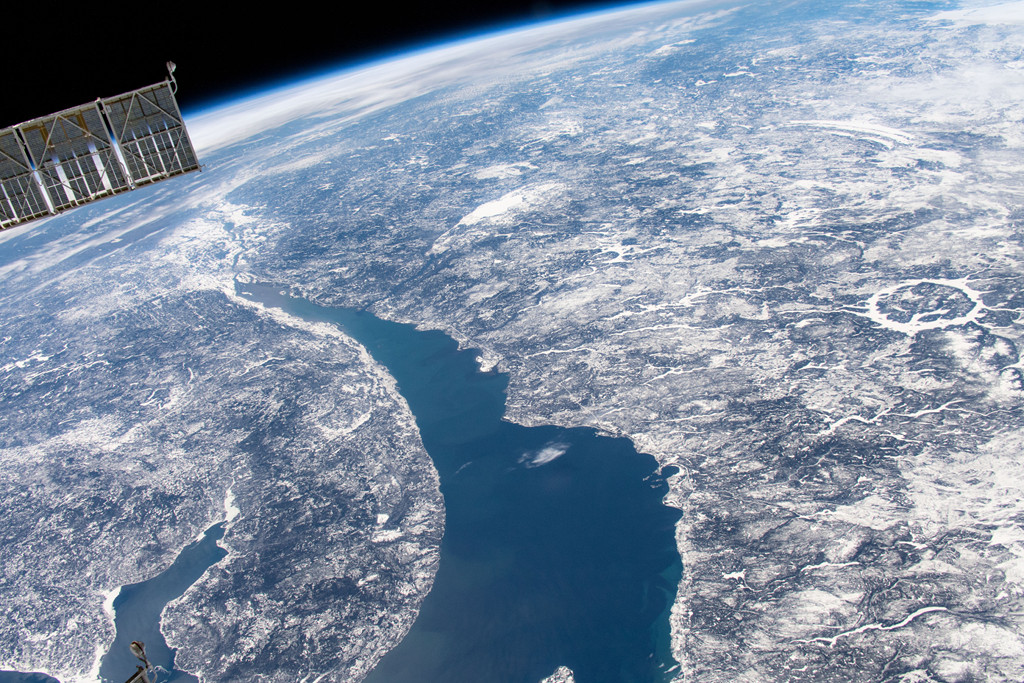
Orbiting 400 kilometers above Quebec, Canada, planet Earth, the International Space Station Expedition 59 crew captured this snapshot of the broad St. Lawrence River and curiously circular Lake Manicouagan on April 11. Right of center, the ring-shaped lake is a modern reservoir within the eroded remnant of an ancient 100 kilometer diameter impact crater. The ancient crater is very conspicuous from orbit, a visible reminder that Earth is vulnerable to rocks from space. Over 200 million years old, the Manicouagan crater was likely caused by the impact of a rocky body about 5 kilometers in diameter. Currently, there is no known asteroid with a significant probability of impacting Earth in the next century. Each month, NASA’s Planetary Defense Coordination Office releases an update featuring the most recent figures on near-Earth object close approaches, and other facts about comets and asteroids that could pose a potential impact hazard with Earth.

2024-05-25

Auteur/autrice

pelerinmarc@gmail.com

Publications similaires

Dans

Venus and Jupiter: Conjunction from Avebury

Pour observer Vénus et Jupiter ensemble ce mois-ci, vous n’aurez pas besoin de jumelles ni même d’un télescope. Il suffit de lever...

Lire la suite
Dans

The Mermaid Nebula Supernova Remnant

La Petite Sirène aurait-elle pu se transformer en poussière d’étoiles au lieu d’écume de mer ? C’est ce qu’il semble dans cette...

Lire la suite
Dans

The Eagle Nebula and Friends

Qu’est-ce qui semble vouloir engloutir les Grands Piliers de la Création ? La nébuleuse de l’Aigle (M16) n’est ni un oiseau, ni...

Lire la suite
Dans

Thor’s Helmet

Thor n’a pas seulement son propre jour (jeudi), mais aussi un casque dans les cieux. Populairement appelé Casque de Thor, NGC 2359...

Lire la suite
Dans

Comet R3 PanSTARRS Through Time

Qu’advient-il d’une comète lorsqu’elle quitte notre système solaire interne ? L’arrivée d’une comète dans le système solaire interne est généralement accueillie avec...

Lire la suite
Dans

Jupiter and Venus from Earth

C’était visible partout dans le monde. La conjonction de Jupiter (à gauche) et de Vénus (à droite) au coucher du soleil en...

Lire la suite